
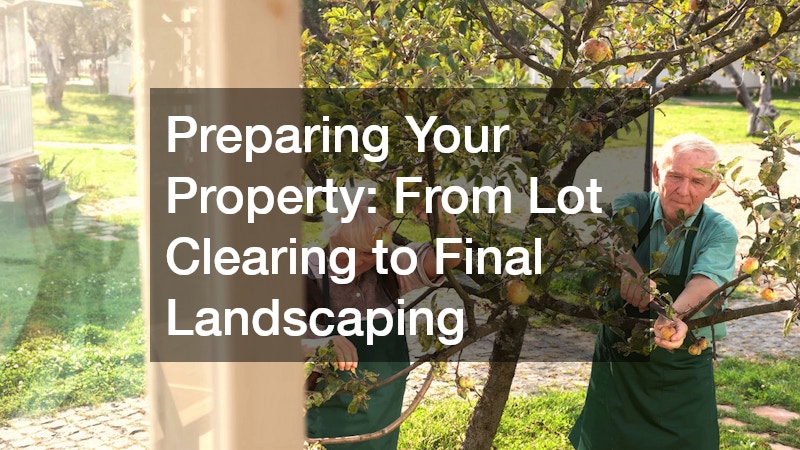
A well-maintained landscape does far more than simply enhance the visual appeal of a home; it is a dynamic, living asset that dramatically elevates overall property value, regulates environmental temperatures, and provides a profound sense of tranquility. Mature, flourishing greenery can frame a house beautifully, creating an inviting atmosphere that speaks to a history of careful stewardship. Conversely, neglected greenery can rapidly transform from a beautiful natural asset into a severe and costly liability. Overgrown branches can scrape against roofing materials, compromised root systems can threaten foundational integrity, and diseased timber can pose an imminent threat to life and property during severe weather events.
The fundamental problem that many property owners face is falling into a pattern of reactive yard maintenance. It is all too common for individuals to wait until a violent storm snaps a massive branch, or a pervasive fungal disease entirely rots a trunk, before they decide to take action. This reactive approach is not only incredibly stressful but also exponentially more expensive. Emergency interventions, structural repairs to damaged homes, and the complete loss of mature plant life carry heavy financial and emotional burdens that could otherwise be avoided.
The solution lies in implementing a proactive, year-round maintenance plan that addresses the entire ecosystem of your yard, from the very top of the canopy down to the microscopic vitality of the soil. Landscaping should not be viewed as a series of isolated chores, but rather as an ongoing strategy of environmental management. By understanding the seasonal rhythms of plant life and the hidden signs of structural distress, you can stay several steps ahead of potential disasters.
By systematically assessing plant health, executing carefully timed seasonal maintenance, safely mitigating overhead hazards before they fall, and properly restoring the soil after major changes, property owners can cultivate a beautiful, safe, and thriving outdoor environment. The following comprehensive guide will walk you through every critical phase of property management, providing you with the deep knowledge required to transform your yard into a pristine, heavily fortified, and visually stunning landscape.
Assess the Health and Structural Integrity of Your Canopy

The absolute foundation of responsible property management begins with a thorough and ongoing assessment of your canopy’s health and structural integrity. Trees are massive, complex biological systems, and they rarely fail without warning. However, the signs of decline are often subtle and easily missed by the untrained eye. Conducting routine visual inspections is the first line of defense in identifying early signs of disease, pest infestation, or structural weakness before they culminate in a catastrophic collapse.
To truly understand what is happening within your landscape, you must look beyond the green leaves. Walk your property seasonally and scrutinize the trunks and root flares. Deep, weeping fissures in the bark can indicate sudden temperature stress or bacterial infections. The presence of fungal conks—mushroom-like growths emerging from the bark or the base of the trunk—is a major red flag, often signaling advanced internal decay and heart rot that has hollowed out the structural core of the wood. Furthermore, if you notice early leaf drop in the middle of summer, severe discoloration (chlorosis), or dead tips at the very top of the canopy (dieback), the plant is communicating that it is under severe systemic stress.
Because diagnosing these complex biological issues requires specialized knowledge, property owners should not rely on guesswork. Hiring certified arborists is essential for establishing an accurate health profile of your landscape. These professionals have undergone rigorous scientific training to understand plant pathology, entomology, and soil science. They can differentiate between a temporary nutrient deficiency and a terminal disease like Oak Wilt or Dutch Elm Disease.
Establishing a baseline health report with a professional allows you to map out a highly effective strategy for the future. Instead of throwing random fertilizers at a struggling yard, you can schedule routine tree services proactively. This targeted approach ensures that you are treating specific pest infestations, correcting precise soil pH imbalances, or addressing minor structural flaws efficiently, saving you significant time and money while preserving the integrity of your canopy.
Actionable Steps for Canopy Assessment:
-
Perform quarterly visual audits: Make it a habit to walk your property at the change of every season. Look for changes in bark texture, unseasonal leaf loss, and any signs of insect boring holes near the base.
-
Examine the root flare: The base of the trunk should flare out naturally where it meets the soil. If it looks like a telephone pole going straight into the ground, it may be planted too deep or suffocating from excess soil, which requires immediate excavation.
-
Look for root heaving: Inspect the soil around the base for cracking or lifting. This often indicates that the root system is failing to anchor the massive weight above, presenting an immediate tipping hazard.
-
Document changes with photographs: If you notice a suspicious crack or a patch of discoloration, take a picture of it. Compare it a month later to see if the decay is rapidly advancing.
-
Request a formal risk assessment: When consulting with plant health experts, ask for a written risk assessment report that categorizes each major plant on your property by its likelihood of failure and potential impact zone.
Schedule Seasonal Maintenance for Optimal Growth
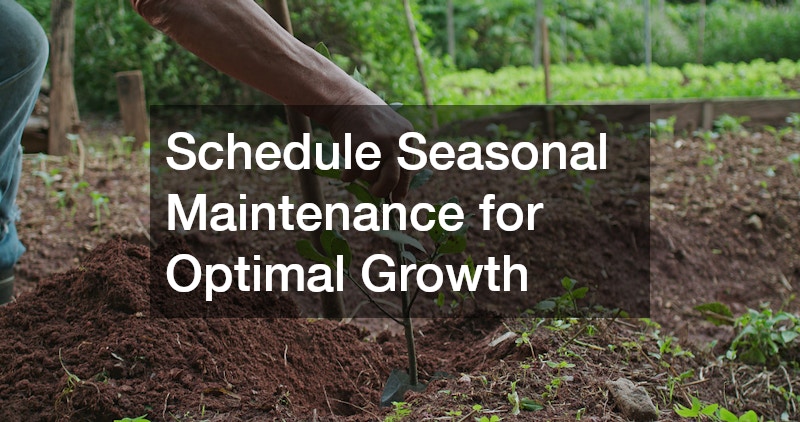
Once you have established the baseline health of your landscape, the next critical phase is managing its physical growth. Trees and shrubs do not self-regulate their size in a way that is compatible with suburban or urban living. Without human intervention, they will grow into power lines, encroach upon neighboring properties, and develop dense, light-blocking canopies that kill the turfgrass below. However, managing this growth requires a deep understanding of plant biology, specifically the difference between aesthetic shaping and structural modification, as well as the crucial importance of timing.
The timing of your cuts can dictate whether the plant thrives or spirals into decline. The optimal time for major structural reduction is during late winter, while the plant is fully dormant. During dormancy, the sap is not running, which minimizes the bleeding of vital fluids. Furthermore, dormant cuts are less likely to attract wood-boring insects and fungal spores, which are highly active during the spring and summer. Making heavy cuts during the spring growth flush robs the plant of the energy it just expended to create new foliage, causing severe stress and stunting future development.
It is also vital to understand the distinction between the types of maintenance required. For routine shaping of hedges, ornamental shrubs, and the removal of minor, obstructive branches that brush against windows, utilizing a standard tree trimming service is highly effective. This level of maintenance focuses on the exterior aesthetics, improving sunlight penetration to the lawn, and maintaining a neat, manicured appearance that boosts curb appeal.
Conversely, when dealing with massive mature oaks, maples, or pines, you are dealing with structural engineering. If a mature specimen has developed co-dominant stems (two main trunks competing for dominance with a weak “V” shaped union) or requires massive weight reduction on a lateral limb extending over a roof, you need the expertise of a specialized tree pruning company. These professionals understand how to execute complex drop-crotch cuts and canopy elevations that alter the wind resistance and weight distribution of the structure, ensuring it can withstand hurricane-force winds without failing.
Actionable Steps for Seasonal Maintenance:
-
Plan major cuts for late winter: Schedule your heaviest structural reductions between January and early March, taking advantage of the dormant season to protect plant vitality.
-
Avoid the removal of too much foliage: Never allow anyone to remove more than 25 percent of a live, green canopy in a single year. “Topping”—the indiscriminate cutting of main vertical branches—starves the root system and creates hazardous, weakly attached regrowth.
-
Sanitize cutting equipment: Ensure that any tools used on your property are sanitized with rubbing alcohol or a bleach solution between cuts, especially when moving from a diseased specimen to a healthy one, to prevent cross-contamination.
-
Improve structural airflow: Focus on “thinning” the interior of the canopy rather than just shaping the outside. Allowing wind to pass freely through the branches drastically reduces the sail effect during severe storms.
-
Eliminate rubbing branches: Identify and remove branches that are crossing and rubbing against one another. The friction strips away protective bark, creating an open wound that invites disease and rot.
Prepare Overgrown Land for New Construction or Hardscaping

As families grow and lifestyles evolve, the functional needs of a property often change. You may find yourself wanting to expand your usable outdoor living space, lay a massive new concrete patio, install an inground swimming pool, or build a detached garage. However, property owners are frequently confronted with sections of land that have been entirely consumed by decades of neglect. Overgrown scrub, dense underbrush, invasive vines, and clusters of wild saplings can render a significant portion of your acreage completely impenetrable and unusable. Preparing this wild land for new construction requires a systematic, heavy-duty approach.
Clearing a lot is not a weekend project that can be tackled with a hand saw and a wheelbarrow. The root systems of invasive species like buckthorn, honeysuckle, or wild grapevines are incredibly resilient and will rapidly regenerate if not entirely eradicated. Furthermore, the sheer volume of biomass generated by clearing even a quarter-acre of dense brush is staggering. To reclaim this space efficiently, property owners must rely on comprehensive lot clearing services. These operations utilize heavy-duty machinery, such as forestry mulchers attached to skid steers, which can drive directly into dense thickets and instantly grind saplings and brush down to the soil level, turning impenetrable walls of vegetation into a manageable layer of organic material.
Beyond the surface vegetation, preparing a site for construction requires dealing with the subterranean architecture—the massive network of roots that will interfere with pouring foundations or running underground utilities. Excavators and stump pullers must be brought in to completely alter the grading and ensure a clean, stable slate for builders. Because this involves highly destructive heavy machinery, it is absolutely paramount that property owners thoroughly vet the tree companies they hire for this phase. You must ensure they carry extensive liability and worker’s compensation insurance, as operating heavy machinery on uneven, overgrown terrain is inherently dangerous. Furthermore, reputable organizations will always coordinate with local utility marking services (like 811) to ensure they do not sever buried gas lines or fiber optic cables during the excavation process.
Actionable Steps for Preparing Overgrown Land:
-
Define the precise clearing boundaries: Before machinery arrives, clearly mark the exact perimeter of the expansion area with high-visibility surveyor’s tape to prevent accidental damage to greenery you wish to keep.
-
Establish root protection zones: For the mature specimens bordering the construction site that you want to preserve, set up sturdy fencing at the drip line (the outer edge of the canopy) to prevent heavy machinery from compacting the soil and crushing their root systems.
-
Verify underground utilities: Legally mandate that any company digging or grinding on your property has actively confirmed the location of all underground water, sewer, electrical, and gas lines prior to breaking ground.
-
Plan for biomass disposal: Decide in advance whether you want the generated wood chips hauled away entirely or left in a designated pile on your property to be used later for natural pathways or compost.
-
Address invasive root systems: If your lot is choked with aggressive invasive species, discuss chemical or mechanical root eradication methods to ensure the underbrush does not sprout through your newly laid topsoil the following spring.
Safely Eliminate Dead or Hazardous Canopy Risks
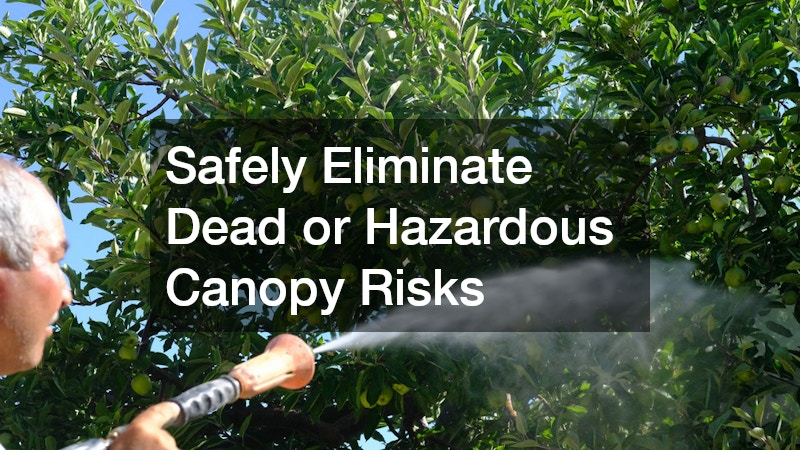
Despite the best proactive maintenance and care, there are inevitably times when a massive piece of timber must be brought down completely. Extreme weather events, lightning strikes, advancing age, and incurable diseases can transform a once-majestic focal point of your yard into a terrifying hazard. Identifying these imminent dangers and executing complex takedowns without damaging the surrounding property is the most high-stakes aspect of landscape management.
Property owners must learn to identify the most critical danger signs. The most notorious hazard is the “widowmaker”—a massive, dead branch that has snapped but remains suspended precariously high up in the canopy, waiting for a strong gust of wind to dislodge it. Additionally, if you notice a massive trunk has developed a sudden, severe lean toward your roof, or if the soil around its base is actively lifting on the opposite side of the lean, total failure is imminent. Trees that feature a deep “V-crotch” with included bark (where bark is trapped between two main stems, preventing them from fusing together physically) are incredibly prone to splitting violently down the middle under the weight of ice or heavy foliage.
When facing these hazards, property owners must fight the urge to handle it themselves. The extreme physics involved in felling heavy timber make DIY chainsaw work exceptionally dangerous. Gravity, the unpredictable tension in twisted wood, and the instability of working from ladders result in thousands of severe injuries every year. When dealing with hazardous timber, especially after a severe storm has compromised its stability, you must immediately contact professional tree removal services. These highly trained crews utilize bucket trucks, cranes, and complex rope-and-pulley rigging systems to systematically dismantle massive structures piece by piece. They understand how to safely lower multi-ton logs over delicate rooftops, glass sunrooms, and intricate landscaping without causing a single scratch.
If an emergency strikes at night or during a hurricane, do not approach the damaged area. Cordon off the yard and wait for an emergency tree removal service to arrive. While you wait, you can facilitate a safer and faster operation by preparing the ground level.
Actionable Steps for Hazardous Removals:
-
Clear the drop zone: Move all vehicles, patio furniture, potted plants, and easily damaged lawn ornaments far away from the work area to give the ground crew ample space to operate safely.
-
Secure pets and children: Ensure that all family members and pets are kept strictly indoors while chainsaws and heavy rigging equipment are in use.
-
Communicate with neighbors: If the hazardous timber borders a property line, inform your neighbors of the scheduled work so they can also move vehicles and secure their side of the fence.
-
Unlock access points: Ensure all gates are unlocked and that the path from the street to the backyard is completely clear of debris, allowing workers to easily transport heavy logs out to the chipper.
-
Stay away from downed lines: If a falling branch has taken down a power line, assume it is live and lethal. Do not approach it under any circumstances, and immediately notify your local utility provider.
Restore the Soil and Finalize Your Landscape Beds

The physical removal of a massive stump and the roaring of the woodchipper are dramatic events, but they do not mark the end of the landscaping process. The aftermath of heavy yard work leaves a significant physical and chemical scar on your property. Once the heavy machinery departs, property owners are frequently left staring at a massive, unsightly depression in the ground, surrounded by a wide radius of compacted dirt and a towering pile of acidic wood shavings. To truly finish the job and reclaim the aesthetic beauty of the yard, you must focus on restoring the soil biology and finalizing the surface landscape.
The first challenge to address is the chemical imbalance left behind. When the designated tree removers finish using the heavy-duty stump grinder, they churn the remaining subterranean wood into the surrounding earth. While it might seem natural to just leave the wood chips mixed into the dirt, decaying wood actively robs nitrogen from the surrounding soil as it breaks down. If you attempt to plant grass seed or delicate flowers directly into this mixture, they will quickly turn yellow and die from nitrogen starvation. You must meticulously rake out the bulk of the grindings. Once the hole is relatively clear, fill the depression with high-quality, screened topsoil mixed with a nitrogen-rich starter fertilizer. This process prevents the formation of dangerous sinkholes as the remaining deep roots decay and provides a nutrient-dense foundation for new life.
With the soil chemistry balanced and the ground leveled, you can focus on the final aesthetic touches that define a pristine property. If you are converting the area into a new garden bed or simply refreshing the borders of your existing landscape, edging is crucial. Create a clean, deep trench line to separate the turf from the beds. Finally, apply a protective layer of ground cover. For precision work around delicate perennials, foundational shrubs, or newly planted saplings, utilizing high-quality bagged mulch is vastly superior to having a massive, unregulated bulk pile dumped in your driveway. Applying a measured, two-to-three-inch layer regulates soil temperature during extreme heat, drastically suppresses the germination of weed seeds, and retains vital moisture during drought conditions, ensuring your renewed landscape thrives year-round.
Actionable Steps for Soil Restoration and Finishing:
-
Remove excess stump grindings: Shovel and haul away the majority of the wood chips from the grinding site before attempting to lay any topsoil, ensuring the new plants have a proper medium to root in.
-
Tamp the new soil: As you fill the void left by the stump, lightly tamp the topsoil down in layers. This prevents the ground from settling dramatically after the first heavy rainstorm.
-
Apply nitrogen fertilizer: Counteract the nitrogen-depleting effects of decaying root matter by mixing a slow-release nitrogen fertilizer into the new topsoil before planting grass seed.
-
Avoid mulch volcanoes: When applying ground cover around newly planted saplings, never pile it up against the trunk. Keep the mulch pulled back a few inches from the bark to prevent moisture-induced rot and rodent nesting.
-
Refresh ground cover annually: To maintain the vibrant color, weed suppression, and moisture-retaining benefits, lightly rake your beds each spring and top them off with a fresh, thin layer of protective ground cover.
Conclusion
Transforming a raw, potentially hazardous yard into a meticulously curated and deeply fortified landscape is a highly rewarding journey. It requires a transition from passive observation to active, educated management. The trees, shrubs, and soil that make up your property are living, breathing entities that respond directly to the level of care and foresight you invest in them. By moving away from reactive emergency responses and embracing a holistic strategy, you protect your real estate investment, safeguard your family from natural hazards, and create a daily environment of peace and beauty.
The processes detailed in this guide—from diagnosing early structural weaknesses and perfectly timing your pruning cuts, to completely clearing overgrown brush, executing complex aerial takedowns, and scientifically amending depleted soil—represent the gold standard of property stewardship. While the physical labor and biological science involved can be complex, you do not have to tackle it entirely alone. The key to long-term success is knowing when to perform basic maintenance and knowing exactly when to call upon the specialized knowledge and heavy machinery of industry professionals.
Do not wait for the next severe weather warning to start thinking about the massive timber looming over your roof. Take the initiative to walk your property this weekend with a critical eye and a notepad. Look at the root flares, study the canopy structures, and note any areas of dense, unusable brush. By identifying potential issues today and beginning a dialogue with local experts to plan your seasonal maintenance, you are taking the most vital step toward cultivating a landscape that will remain safe, healthy, and breathtakingly beautiful for generations to come.
